Wind energyWINDER wind turbines
WINDER wind turbines
From the WINDER archive. The specifications, tariffs, connection rules and statistics in this article may have changed since publication.
Homeowners need dependable power that saves money and reduces their environmental impact. An attractive piece of metal standing in the garden is little use by itself.
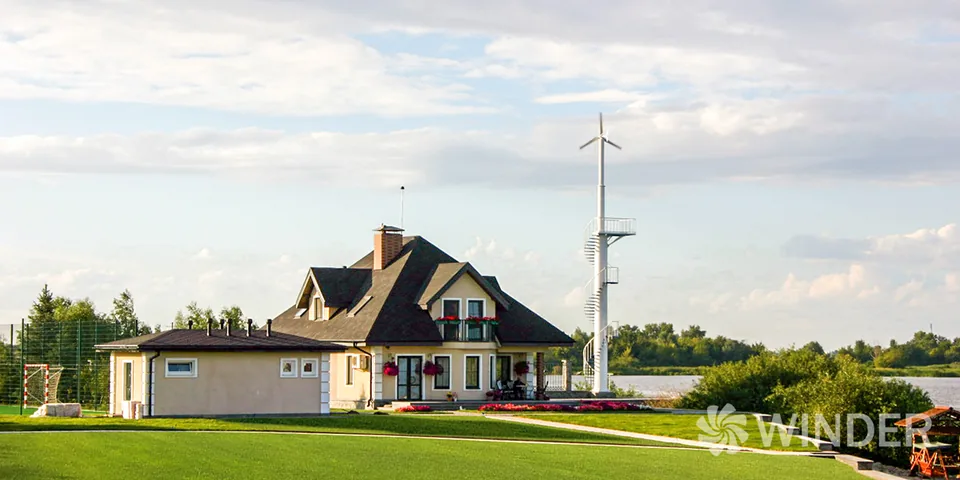
This section introduces the WINDER wind turbine range. Select a model below for detailed specifications and equipment options.
Model range of wind turbines
The WINDER range comprises the W and T series. Both operate automatically without user intervention.
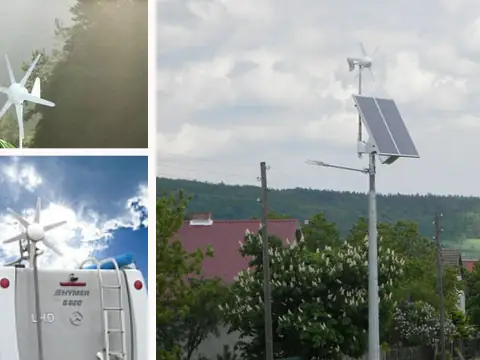
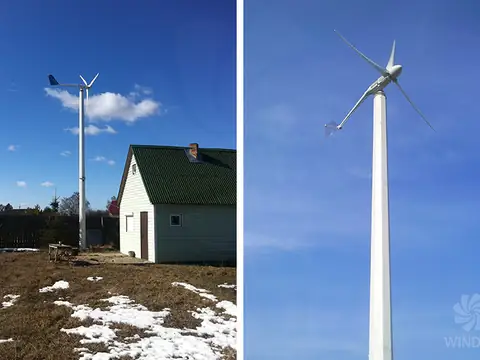
The turbines are durable and require little maintenance. All models up to 12 kW use a tail vane and two independent systems to protect against high winds. They can withstand wind speeds of up to 45 m/s.
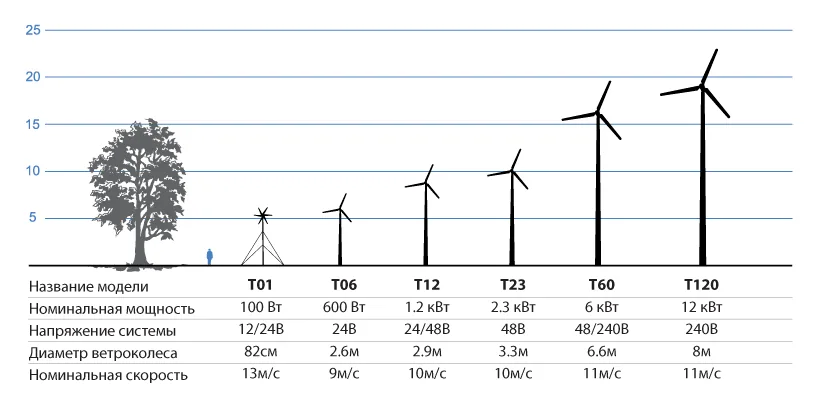
- T01 (100 W)
- W2 (300 W, an archived W-series model for small off-grid loads; request parameters and masts)
- T06 (600 W)
- T12 (1.2 kW)
- T23 (2.3 kW)
- W4 (2 kW)
- W6 (5 kW)
- T60 (6 kW)
- T120 (12 kW)
WINDER wind turbines have been available in Ukraine since 2006. They use a mechanical tail vane to orient the rotor into the wind, a system WINDER considers more reliable than electronic controls with wind-speed and direction sensors.
Wind turbines can provide backup and off-grid electricity, heating and hot water. They can also power desalination, water condensation and irrigation equipment. Each application calls for a different equipment layout and operating scheme.
wind turbine as the main power source
A wind turbine can supply the main source of electricity to a home or commercial site with no grid connection, such as a filling station or mobile phone base station.
A charge controller routes electricity from the turbine to a bank of 2 to 180 batteries. These provide a buffer when wind speeds are too low. An inverter converts the battery output (24–480 V DC) into 220/380 V AC for household appliances.
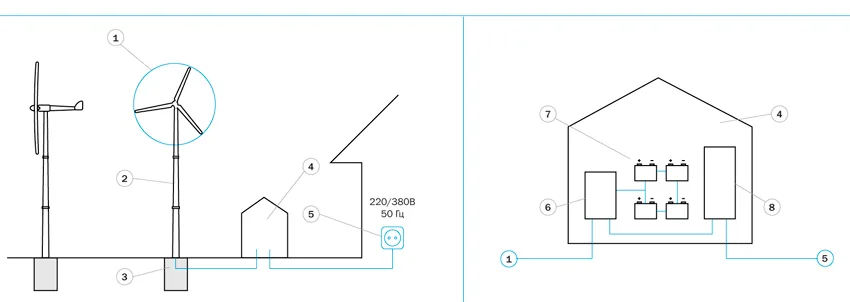
- Turbine nacelle
- Tapered tower
- Foundation
- Inverter room
- Electrical load
- Control cabinet
- Battery
- Inverter
wind turbine in the backup power supply system
A common arrangement uses a wind turbine for backup power. An automatic transfer switch links the turbine system and the grid. Its switching sequence can be configured for the user’s needs.
This arrangement is most effective where the grid connection has limited capacity or poor power quality.
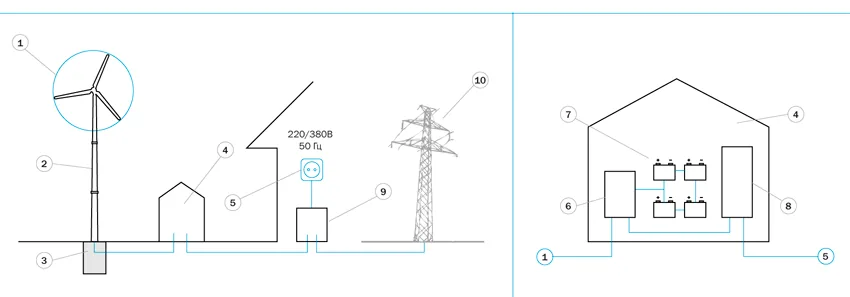
- Turbine nacelle
- Tapered tower
- Foundation
- Inverter room
- Electrical load
- Control cabinet
- Battery
- Inverter
- Automatic transfer switch
- Transformer substation
wind turbine system + solar panels + generator
Integrated systems come in several configurations, all designed to provide reliable backup power. They can operate on or off the grid.
When the battery charge falls below a preset level, the grid-powered charger switches on. If grid power is unavailable, the diesel generator starts. The load-switching sequence is programmed to suit each site.
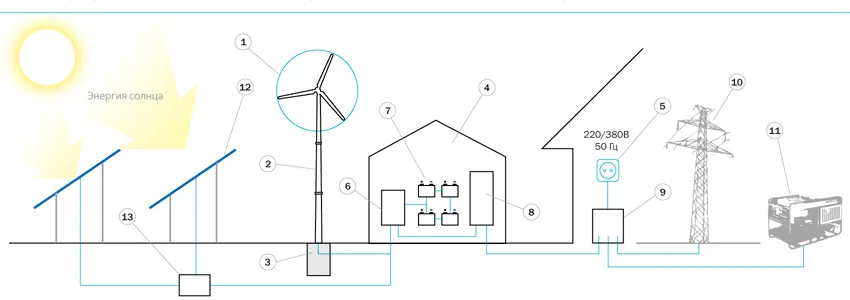
- Turbine nacelle
- Tapered tower
- Foundation
- Inverter room
- Electrical load
- Control cabinet
- Battery
- Inverter
- Automatic transfer switch
- Transformer substation
- Diesel generator
- Solar panels
- PV charge controller
WINDER also imports turbines directly from several established manufacturers, including Fortis Wind Energy in the Netherlands.
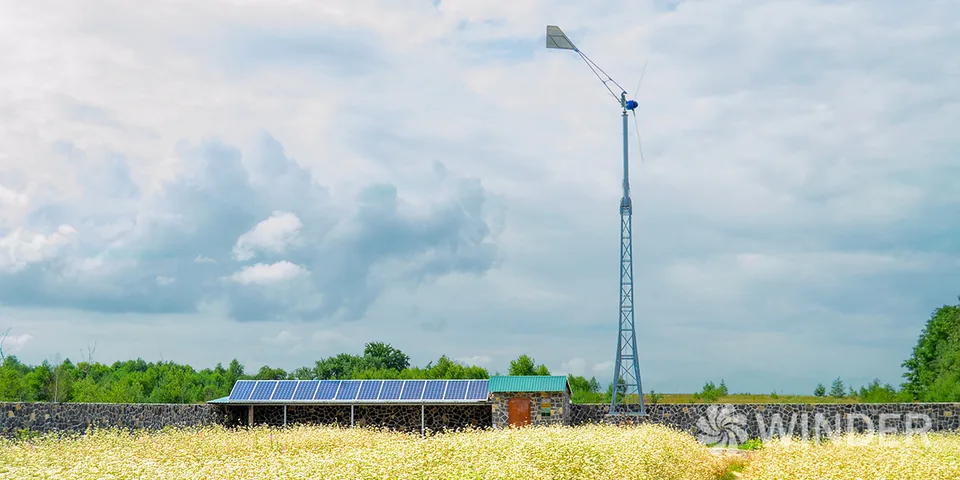
Other manufacturers’ turbine ranges are described in the section on Wind turbines from other manufacturers.
We select equipment and estimate system costs free of charge.