Completed projectsFor businessesFor homesEquipmentWind energySolar generation calculatorContact Request an estimate
+380 44 33 22 660 35 Svitlytskoho Street, Kyiv, 04123, Ukraine

Solar power systems for businesses

A grid-connected solar plant cuts grid electricity costs by 30–60%. To keep critical equipment running through outages, we design hybrid systems with battery energy storage (ESS). We handle everything from design to commissioning.

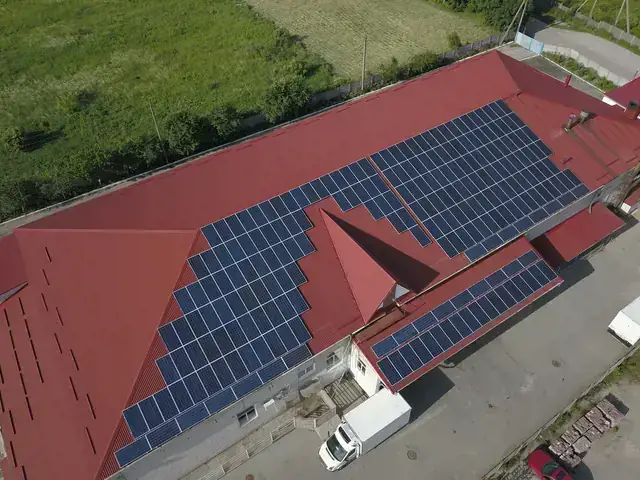
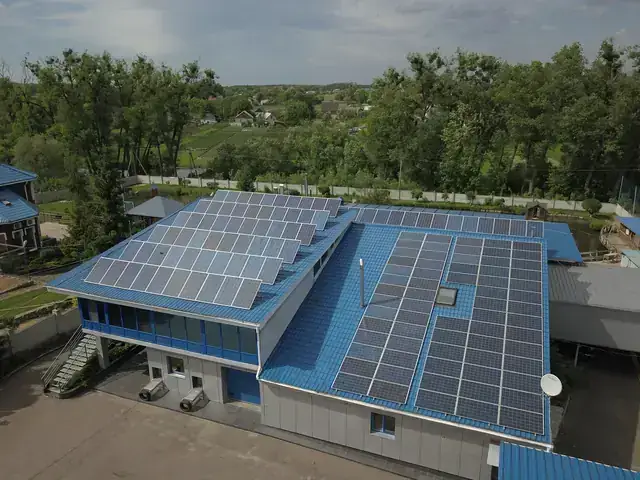
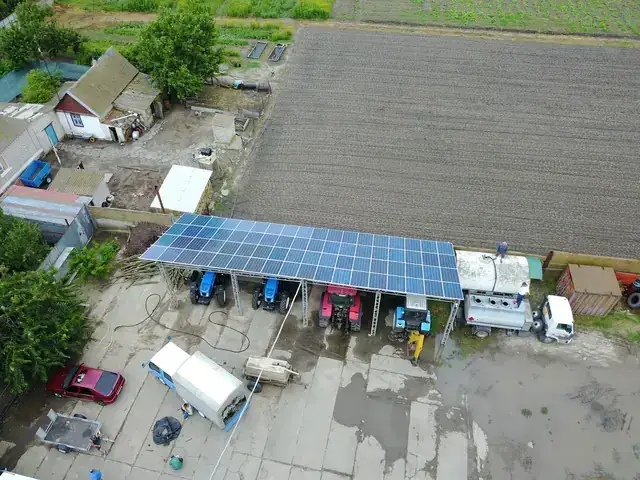
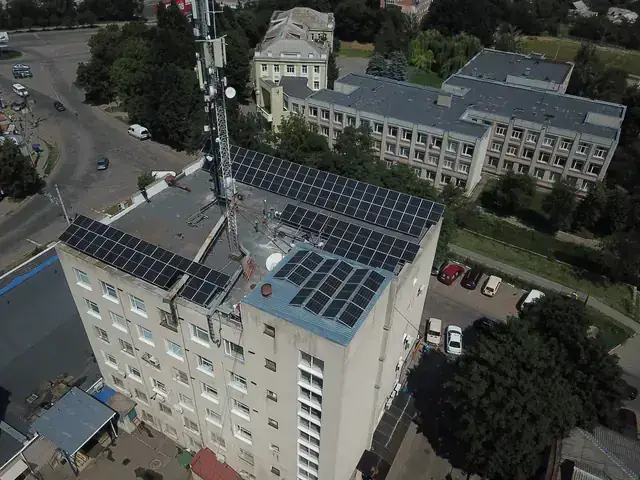
Solar plant on a commercial rooftop

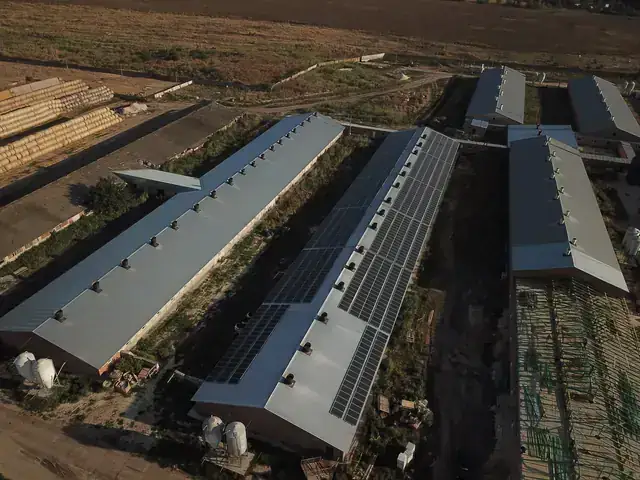
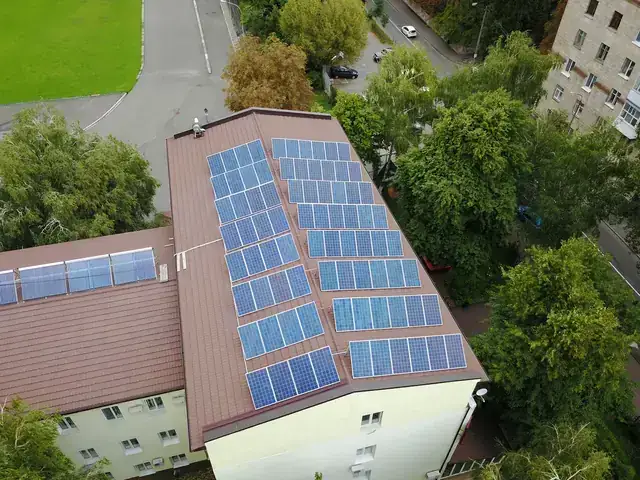
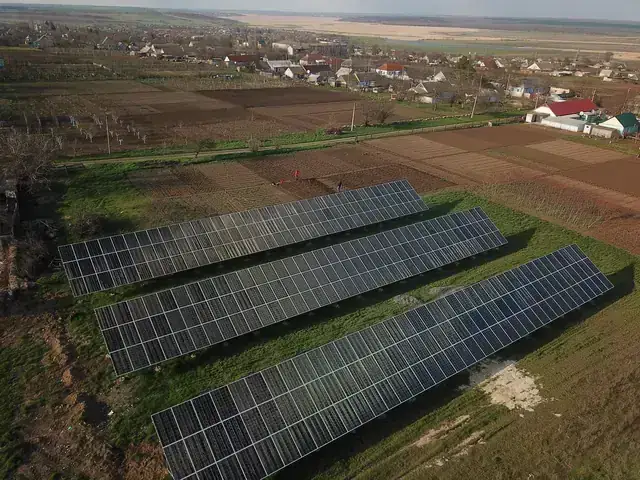
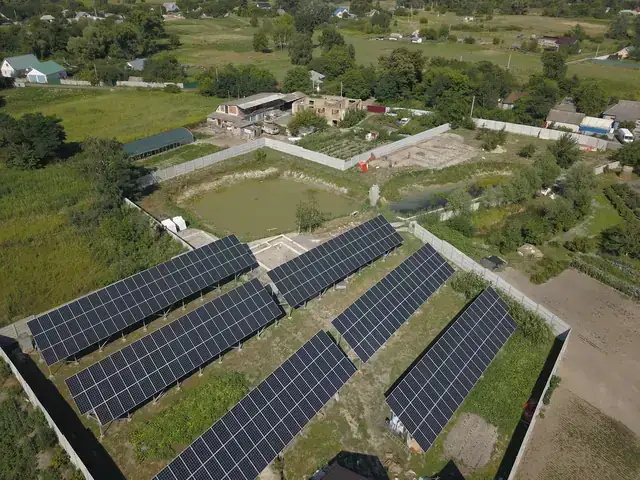
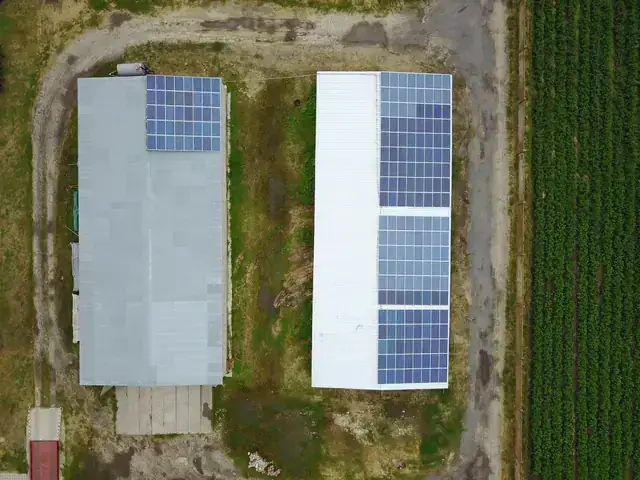
Rooftop and ground-mounted solar for businesses, commercial properties and homeowners’ associations

If you use most of your electricity during the day, solar almost always pays for itself. We will calculate the payback period using your figures.

Manufacturing

Workshops, production lines, metalworking and food processing often have steady daytime loads that match solar output, leaving little surplus energy.

Warehousing and logistics

A large flat roof and around-the-clock refrigeration are a near-ideal combination for solar.

Agriculture

Irrigation, livestock facilities, grain dryers and greenhouses see peak summer demand when solar generation is also at its highest.

Offices and business centres

Air conditioning, server rooms and office lighting use power during business hours, when the sun is shining.

Retail and hospitality

Supermarkets, shopping centres, restaurants and hotels use a lot of energy per square metre, shortening payback periods.

Housing associations and cooperatives

We work with homeowners’ associations, garage cooperatives and apartment buildings, including projects with non-standard ownership arrangements.

How to generate and store your own power

The best configuration depends on whether you want lower bills, resilience during outages, full independence or a combination.

1. Zero export

The plant serves only your own demand. No surplus is sent to the grid and no complex export contracts are required.

  • Fast approval from the network operator
  • 4–6 year payback at current tariffs
  • Minimal paperwork

A smart meter at the grid connection measures site demand in real time. The inverter automatically limits generation to consumption to prevent exports. This works best for factories, warehouses and offices operating during the day.
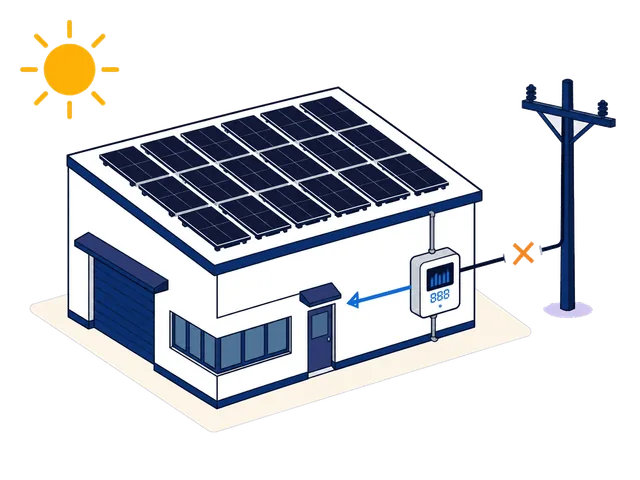
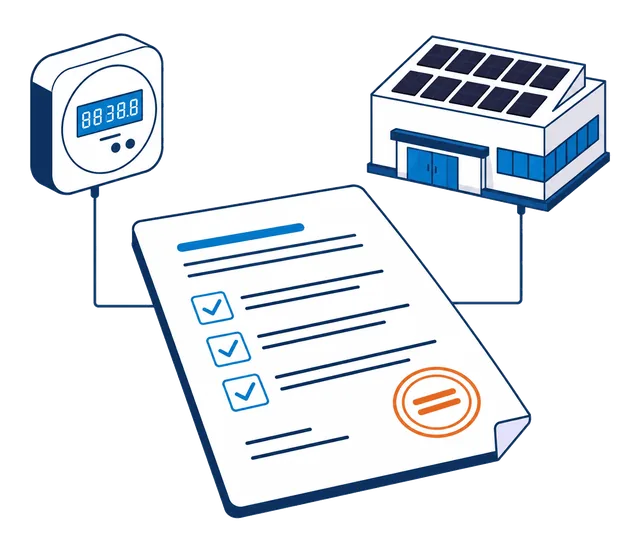
Zero-export system diagram

2. Net Billing

Sell surplus electricity to the grid at the weighted average market price. This requires active consumer status and suits larger sites.

  • Revenue from exported electricity
  • Suitable from about 30 kW
  • More paperwork, greater financial benefit

We arrange active consumer registration and a net billing agreement. Surplus power generated on weekends and during sunny hours is credited at the day-ahead market price, offsetting electricity drawn from the grid at other times.

Active consumer selling surplus power to the grid

3. Hybrid solar with batteries

Pair solar with industrial batteries to keep operating during outages, shift energy purchases to cheaper hours and sell surplus power.

  • Backup for critical loads
  • Peak shaving to reduce peak-rate costs
  • Protection from an unreliable grid

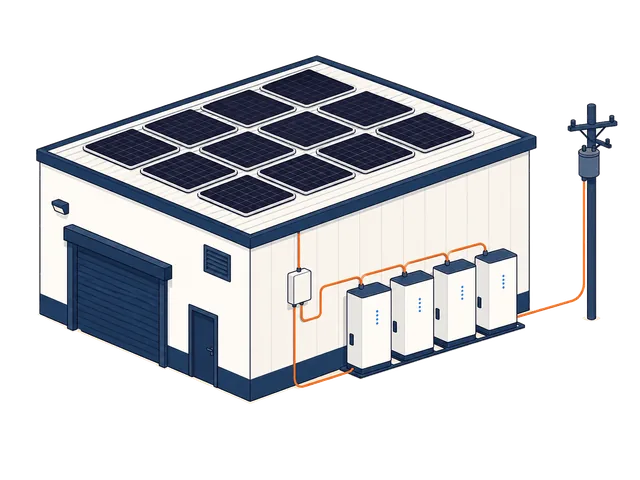
Solar panels, an industrial hybrid inverter and LFP battery storage work together. During an outage the batteries take over critical circuits without interrupting equipment. In normal operation the system reduces morning and evening demand peaks.

Hybrid solar plant with battery storage

4. Battery storage without solar

Industrial batteries keep equipment running during outages. The return is lower than with solar, but storage can provide backup power quickly.

  • For sites without room for panels
  • An interim solution before adding solar
  • Commissioning in 4–8 weeks

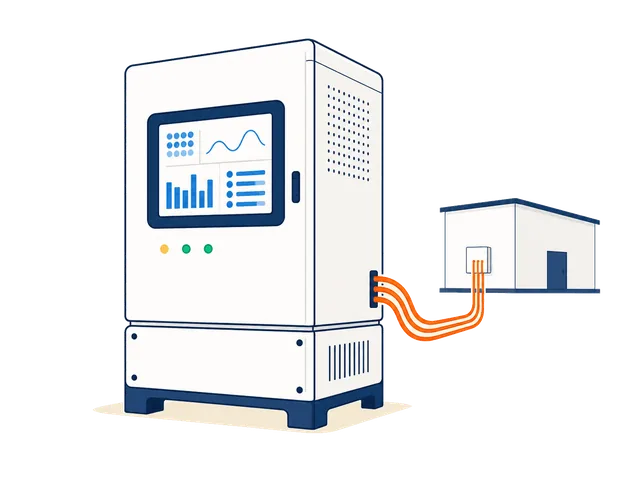
An industrial battery cabinet and inverter charge from the grid when power is available or at the night rate. During outages they supply server rooms, cold rooms, a boiler room or a production line. A solar array can be added later.

Industrial battery storage cabinet

In plain language

What are active consumer status and net billing?

Since 2024, business customers have been able to register as active consumers and sell surplus electricity to the grid. They are credited at the weighted average day-ahead market price.

This arrangement operates under different rules from the residential feed-in tariff and requires different paperwork. WINDER handles everything from technical connection conditions to the agreement with the distribution network operator.

Request a consultation

We handle the entire project

From the first estimate to years of system monitoring, we look after the energy project so you can run your business.

Design and approvals

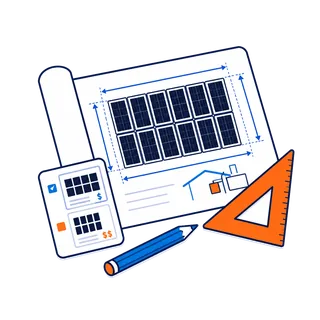
Technical specifications, design documentation, connection conditions and active consumer registration.

Equipment supply

We source equipment directly from Hyundai Energy Solutions and other Tier 1 manufacturers.

Installation and commissioning

Our installation crews work at height on all roof types, including standing seam, profiled sheet and membrane roofs.

Safety and compliance

We assess roof loads and provide fire safety disconnects, earthing and lightning protection in line with Ukraine’s national building standards (DBN).

24/7 monitoring

Cloud monitoring tracks generation, consumption and the condition of each panel. If performance drops, you and our service team receive an alert before the problem shows up on your bill.

Service support

Annual maintenance, warranty repairs and a prompt response to faults.

How we work with businesses

Six steps from the first enquiry to a working plant and signed handover documents. You can follow progress at every stage.

Step 01

Preliminary estimate

We establish demand, roof details, requirements and budget.

Step 02

Site visit

Engineering survey, roof measurement and grid connection check.

Step 03

Design and cost estimate

Feasibility study, engineering design and a financial model comparing options.

Step 04

Approvals

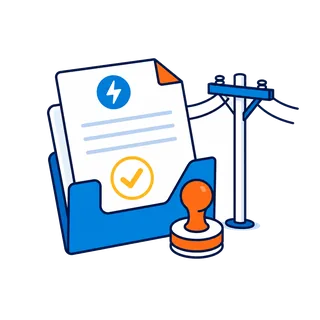
Connection conditions, the network operator agreement and active consumer status.

Step 05

Installation

Delivery, installation, commissioning and testing.

Step 06

Support

Handover, monitoring and warranty service.

Completed commercial projects

View all

Common questions

Around €65,000–85,000 excluding VAT. The price depends on the roof, equipment and whether battery storage is required. We provide a firm quote after the site visit.

Allow 8–16 weeks for a typical 100–300 kW project. Paperwork with the distribution network operator takes the longest. Equipment arrives in 3–6 weeks and installation takes 1–3 weeks.

This is rare and usually happens when a line is overloaded. We can then propose a zero-export system or a battery hybrid that keeps surplus generation off the grid.

Yes. We often start with part of the planned capacity, such as 50 kW of a future 200 kW plant, then expand. We size the inverter for the full capacity at the outset.

The manufacturer covers panels for 10–25 years and inverters for 5–10 years. WINDER warrants the installation for two years. Ongoing service is covered by a separate agreement.

Yes. We allow capacity headroom in the inverter and switchgear. It adds around 5–10% to the budget and costs less than retrofitting later.

We match your actual electricity bill to the region’s solar generation profile and account for capital and operating costs. We base the calculation on current tariffs.

Tell us about your business

Tell us what your business does and when it uses the most electricity. We will assess whether solar will pay for itself or suggest an alternative.

Or call +380 44 33 22 660